Most women have had this exact experience. You walk into a salon with a photo of a haircut you loved on someone else, the stylist cuts it exactly as shown, and somehow it just doesn’t sit right on you. Not because the cut was done badly, but because it was never designed for your face to begin with.
This is precisely what a face shape analysis for hairstyle choices solves. It’s not about copying a trend or a celebrity’s haircut. It’s about understanding the proportions of your own face, forehead width, cheekbone width, jawline shape and face length, and choosing a cut that works with those proportions instead of against them.
This guide walks through how to identify your face shape, exactly which hairstyles suit each shape, and the practical adjustments, parting, layers, fringe placement, that make the real difference between a haircut that flatters you and one that just looks good in a photo.
Why Face Shape Matters More Than the Haircut Itself
A haircut doesn’t exist in isolation. It sits directly next to your face, framing it every single day, which means it has an outsized effect on how balanced or unbalanced your features appear.
The goal of face shape analysis isn’t to change your face. It’s to create visual balance, adding width where a face is narrow, softening angles where a jawline is sharp, or adding length where a face is short and wide. Once you understand your own proportions, hairstyle decisions stop being guesswork and start being a formula you can apply confidently, whether you’re choosing a everyday cut or something for a big event.
How to Identify Your Face Shape
Before matching a hairstyle, you need an accurate read on your face shape. Here’s a simple way to check it yourself.
Pull your hair back completely and look straight into a mirror, or take a straight on photo in good lighting. Then look at three things: the width of your forehead, the width of your cheekbones, and the width and angle of your jawline, and compare them to the overall length of your face.
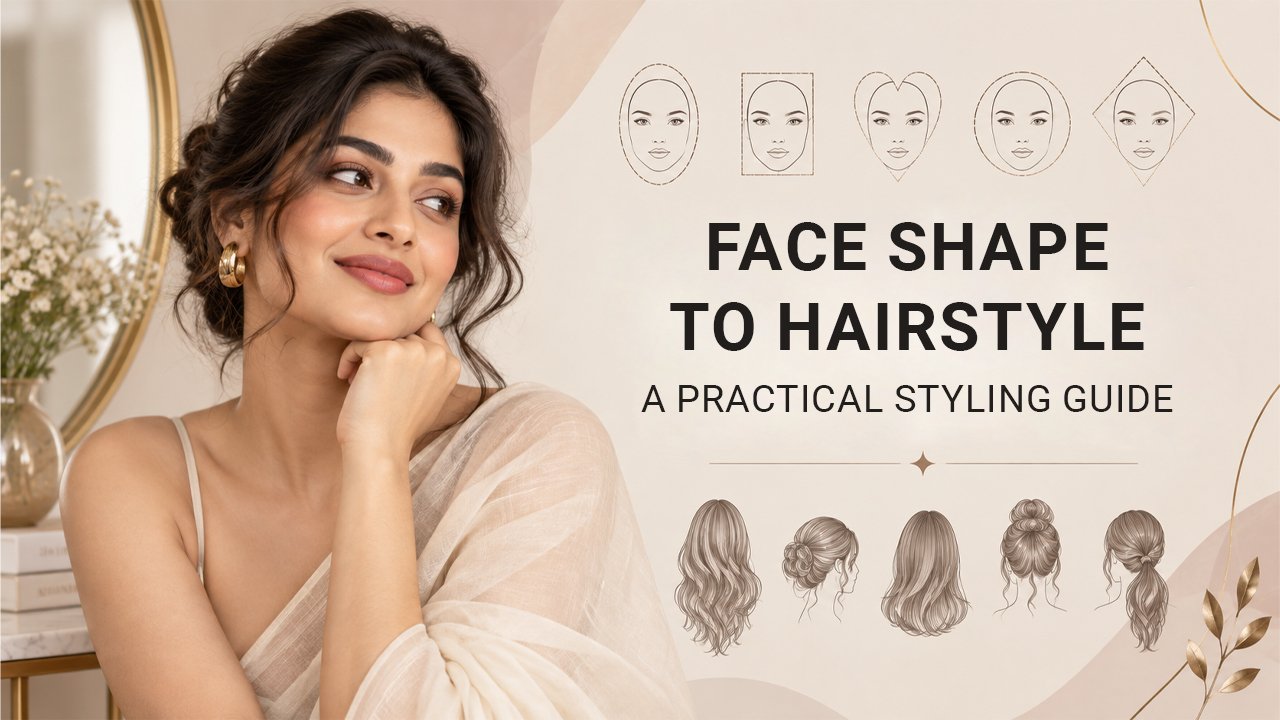
The Six Common Face Shapes:
- Oval: Face length is about one and a half times the width, with a jawline slightly narrower than the forehead. Considered the most balanced shape, since most hairstyles suit it well.
- Round: Face width and length are similar, with soft, curved edges and a rounded jawline. The goal is usually to add length and definition.
- Square: A strong, angular jawline with a forehead of similar width. The goal is usually to soften the angles.
- Heart: A wider forehead tapering down to a narrower, sometimes pointed chin. The goal is usually to balance the width at the top with some volume near the jaw.
- Diamond: Narrow forehead and jawline with the cheekbones as the widest point. The goal is usually to soften the cheekbone area and add width at the forehead or chin.
- Oblong: A longer face with a similar width throughout, forehead, cheekbones and jaw are all fairly even. The goal is usually to add width and reduce the appearance of length.
If you genuinely can’t tell where you land, or you feel like you fall between two shapes, that’s common, and it’s exactly why professional face shape analysis, done in person by a trained eye, tends to be far more reliable than a mirror check or a photo based app.
Best Hairstyles for a Round Face
The goal for a round face is to add length and create definition, since the natural softness of the shape can benefit from a bit more structure.
- Long layers that fall past the chin, since shorter cuts tend to widen the appearance of a round face further.
- A side part instead of a centre part, which breaks up symmetry and adds subtle angles.
- Volume at the crown, which visually elongates the face.
- Avoid blunt, chin length bobs and heavy, straight across fringes, since both tend to emphasise roundness rather than balance it.
Best Hairstyles for a Square Face
The goal for a square face is to soften the strong jawline, so the overall look feels less angular.
- Soft, wavy layers around the jaw, which break up the hard edges of the jawline.
- A side swept fringe, which softens the forehead’s strong horizontal line.
- Longer, layered cuts that fall below the jaw, which draw attention away from the angles.
- Avoid blunt, straight across bobs that stop right at the jawline, since they tend to emphasise the squareness rather than soften it.
Best Hairstyles for a Heart Shaped Face
The goal for a heart shaped face is to balance a wider forehead with some added width or volume near the chin.
- Chin length bobs or lobs, which add visual weight exactly where the face narrows.
- Side swept fringes, which soften a broad forehead without cutting straight across it.
- Soft waves or curls that begin around the cheekbone, which add width near the lower half of the face.
- Avoid heavy volume at the crown or very short, cropped styles, since both can exaggerate the width of the forehead.
Best Hairstyles for a Diamond Face
The goal for a diamond face is to soften the cheekbones and add width at the forehead or chin, since the cheekbones are typically the widest point.
- Side swept fringes, which soften and add width to a narrower forehead.
- Chin length styles with soft layers, which add fullness around the jaw.
- Textured, wispy layers around the cheekbone area, which soften its prominence.
- Avoid styles that pull all the hair back tightly, since this tends to emphasise the cheekbones even further.
Best Hairstyles for an Oblong Face
The goal for an oblong face is to add width and break up the length, so the face doesn’t appear stretched.
- Soft waves or curls, which add horizontal width across the face.
- A blunt, straight across fringe, which visually shortens the face.
- Side parts with volume at the sides rather than the crown, since crown volume adds further length.
- Avoid very long, straight, sleek styles with no layers, since they tend to elongate the face even more.
Best Hairstyles for an Oval Face
The goal for an oval face is simply to maintain its natural balance, since most hairstyles genuinely work well here.
- Almost any length, from a pixie cut to long layers, tends to suit an oval face.
- Fringes of nearly any style, blunt, side swept or curtain, generally work without issue.
- The main consideration becomes personal style and hair texture rather than correcting proportion, since the shape itself is already balanced.
Beyond the Cut: Parting, Layers and Fringe Placement
A face shape analysis for hairstyle choices doesn’t stop at length. Three finer details often make the real difference between a good cut and a genuinely flattering one.
Parting: A centre part tends to emphasise symmetry and length, which suits oval and heart shaped faces well but can make round or square faces appear wider. A side part breaks symmetry and adds subtle angles, which is why it works well for round, square and diamond faces.
Layers: Layers that start near the chin add movement exactly where round and square faces benefit from softening. Layers that start higher, closer to the cheekbone, add width where heart and diamond faces need it most.
Fringe placement: A blunt, straight across fringe visually shortens a long face, making it useful for oblong faces, while a side swept or curtain fringe softens angles, making it more suited to square and diamond faces.
These small adjustments are often what a trained stylist or image consultant focuses on beyond simply choosing a length, since they’re what actually determine whether a cut reads as flattering or just fashionable.
Common Face Shape Hairstyle Mistakes to Avoid
- Choosing a haircut purely based on a photo of someone else, without accounting for how different your own proportions might be.
- Assuming face shape is fixed and permanent, when hairstyle, fringe and even hair colour placement can visually shift how a face shape reads.
- Ignoring hair texture. A style recommended for your face shape may need adjusting if your hair is very fine, very thick, or very curly, since texture changes how a cut falls and sits.
- Overcorrecting. The goal is balance, not disguise. Extremely dramatic layering or fringe choices aimed at fixing a face shape can look forced rather than flattering.
When to Get a Professional Face Shape Analysis
A mirror check and this guide will get you meaningfully closer to the right hairstyle, but self assessment has real limits. Lighting, the angle of a photo, and personal bias all affect how accurately you can judge your own proportions.
A professional face shape analysis looks beyond a single label like round or square, and considers your specific proportions, hair texture, lifestyle and even how your face shape interacts with your body proportions and personal style, giving a far more precise and personalised recommendation than a generic chart ever could.
If you’d like a deeper look at how face shape also affects eyewear and jewellery choices, alongside hairstyle, our earlier guide, Know Your Angles: Face Shape Analysis for Hair, Glasses and Jewellery That Just Work, covers the full picture in more detail.
How Grace and Growth Approaches Face Shape and Hairstyle Analysis
At Grace and Growth, Face Shape and Feature Analysis is one of our core image consulting services, led by founder Mansi Mehta. Rather than handing you a generic chart, the process looks closely at your specific proportions, hair texture and personal style, and translates that into practical, usable hairstyle guidance you can take straight to your stylist.
This analysis often works hand in hand with our Personalised Colour Analysis and Grooming Essentials and Everyday Makeup services, since hairstyle, colour and grooming choices all work together to shape your overall image, not in isolation.
Ready to find the hairstyle that’s actually built for your face, not someone else’s? Book a Face Shape and Feature Analysis consultation with Grace and Growth and stop guessing at the salon chair.
Frequently Asked Questions
How do I know what my face shape is for choosing a hairstyle?
Pull your hair back and compare the width of your forehead, cheekbones and jawline against your overall face length in a mirror or straight on photo. The relationship between these measurements determines whether you’re oval, round, square, heart, diamond or oblong shaped.
What is the best hairstyle for a round face shape?
Long layers past the chin, a side part, and volume at the crown all help add length and definition to a round face. Blunt, chin length cuts and heavy straight fringes tend to emphasise roundness rather than balance it.
What is the best hairstyle for a square face shape?
Soft, wavy layers around the jaw and a side swept fringe help soften the strong, angular jawline that defines a square face. Blunt bobs that end right at the jaw tend to emphasise the angles instead.
Which face shape suits almost any hairstyle?
An oval face shape is generally considered the most balanced and versatile, since its proportions already sit close to ideal, meaning most hairstyles, lengths and fringe styles suit it well.
Does hair texture affect which hairstyle suits my face shape?
Yes. A hairstyle recommended for your face shape may need adjusting based on whether your hair is fine, thick or curly, since texture changes how a cut falls, how much volume it holds, and how the proportions ultimately read.
Can a fringe change how my face shape looks?
Yes. A blunt, straight across fringe visually shortens a longer face, while a side swept or curtain fringe softens angular features, making fringe placement one of the most effective, low commitment ways to adjust how a face shape appears.
Should I choose a hairstyle based on a photo of a celebrity with a similar face shape?
It’s a reasonable starting point, but exact proportions vary even within the same broad face shape category, along with differences in hair texture and density. A hairstyle that works for a celebrity’s specific proportions may need adjustment to genuinely suit yours.
Is a professional face shape analysis worth it if I can check my face shape myself?
A self check gives a useful general direction, but professional analysis accounts for finer proportion details, hair texture, and how your face shape interacts with your broader personal style, typically resulting in a more precise and genuinely flattering recommendation.